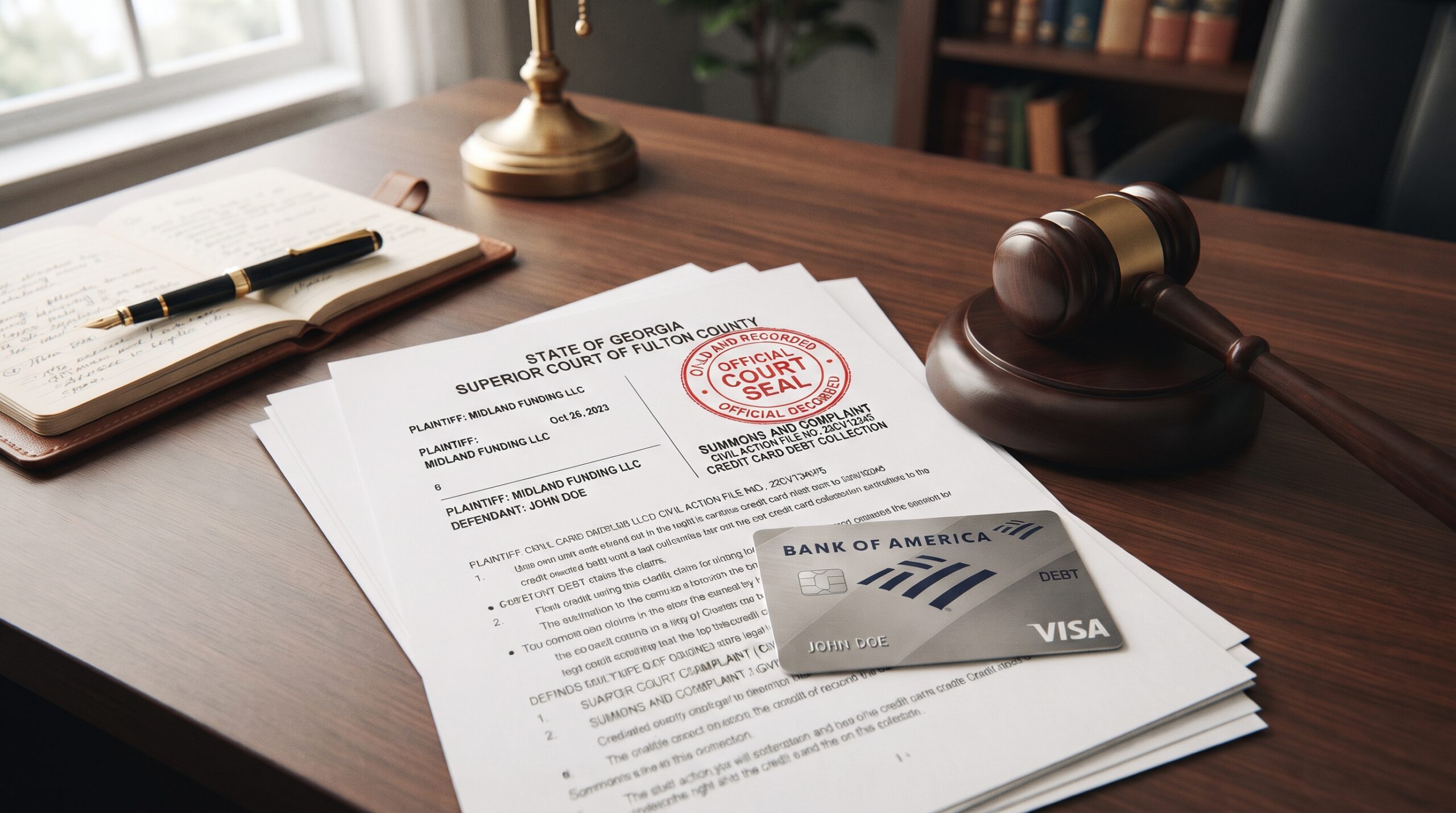
If you just got served with a debt collection lawsuit in Georgia, your first instinct might be to panic. A credit card company or debt collector is claiming you owe thousands of dollars, and now there are court papers sitting on your kitchen table.
Take a breath. Being sued does not mean you have lost. But it does mean you need to act quickly.
At Diwan Law, we defend Georgia consumers against credit card companies, debt buyers, and collection agencies. We challenge questionable claims, fight for dismissals when the evidence supports it, and negotiate settlements that can save our clients real money.
You Have 30 Days to Respond
Once you are served, you have 30 days to file an Answer with the court. That deadline matters more than almost anything else in a debt collection case.
If you ignore the lawsuit, the creditor can ask for a default judgment. That means they win without having to prove a single thing. Once they have that judgment, they can:
- Garnish your wages. A portion of your paycheck gets taken before you ever see it.
- Freeze your bank account. Money sitting in your account can be collected, subject to applicable exemptions.
- Place liens on your property. A judgment can affect certain property you own.
- Add costs and interest. The amount you owe can grow well beyond the original balance.
Georgia law provides a limited 15-day period to open a default by filing an Answer and paying costs. Do not rely on that extra time.
The sooner you act, the more options you have.
Who Is Suing You?
If you have received a lawsuit, the name on the paperwork might not be one you recognize. That is because many collection suits are filed by debt buyers, companies that purchase old accounts from banks and lenders for a fraction of what they claim you owe.
Common debt buyers that file collection lawsuits in Georgia include:
- LVNV Funding, LLC
- Midland Funding, LLC
- Portfolio Recovery Associates, LLC
- Velocity Investments, LLC
- Cavalry SPV I, LLC
- Jefferson Capital Systems, LLC
- Credit Corp Solutions, Inc.
- Crown Asset Management, LLC
- Unifund CCR, LLC
- Spring Oaks Capital, LLC
Here is something many consumers do not realize. Just because a debt buyer claims to own your account does not mean it can prove its case in court. Debt buyers must establish their right to collect the specific debt. Missing assignments, incomplete account records, and disputed balances may create real opportunities to challenge their claims.
Original creditors also file lawsuits. Banks like American Express, Capital One, Discover Bank, Citibank, Synchrony Bank, Chase Bank, and Wells Fargo all pursue collection actions in Georgia courts.
Whether you are being sued for $2,000 or $20,000, you have the right to defend yourself.
Five Reasons You Should Not Automatically Pay
Receiving court papers is intimidating. But before agreeing to pay the amount demanded, ask yourself these questions.
Can they prove you owe the debt? Debt collectors sometimes rely on incomplete records. The plaintiff must prove its claim with legally sufficient evidence.
Can they prove they own your account? If your debt was sold multiple times, the company suing you may need to establish a valid chain of ownership connecting your specific account to the plaintiff.
Is the amount correct? Incorrect balances, unauthorized fees, and uncredited payments can all affect the amount claimed.
Is the debt too old to sue on? Georgia has statutes of limitations that may prevent creditors from successfully enforcing certain older debts. The applicable deadline depends on the type of obligation.
Can the lawsuit be settled for less? You may not have to pay the full amount demanded to resolve the case. Depending on the creditor and the circumstances, negotiated settlements may include reduced balances or affordable payment arrangements.
Can You Fight a Debt Lawsuit Without Filing Bankruptcy?
Absolutely. Bankruptcy is not your only option, and for many Georgia consumers facing credit card lawsuits, it is not the best one either.
Alternatives include defending the lawsuit, challenging the creditor's evidence, and negotiating a settlement. At Diwan Law, we focus on helping consumers explore those alternatives before considering anything else.
We can:
- File an Answer and assert applicable defenses
- Challenge a creditor's right to collect
- Examine account records and disputed balances
- File motions and represent you in court
- Negotiate reduced settlements and affordable payment plans
- Pursue dismissal when legally appropriate
Every case is different, but you may have more options than you realize.
What Happens If You Do Nothing?
Ignoring the lawsuit will not make it disappear. In fact, doing nothing is the single most expensive mistake a defendant can make.
A creditor that obtains a judgment can pursue wage garnishment, bank garnishment, and other collection remedies. Once a judgment is entered, challenging the debt becomes much more difficult.
Do not give a debt collector an easier path to judgment by failing to respond.
Diwan Law Defends Georgia Consumers
Debt collectors have lawyers working for them. You should have someone fighting for you, too.
Whether you are being sued by LVNV Funding, Midland Funding, Portfolio Recovery Associates, American Express, Synchrony Bank, or another creditor, we can help you understand your rights and develop a strategy.
We represent consumers throughout Georgia, including Atlanta, Fulton County, DeKalb County, Cobb County, Gwinnett County, Clayton County, and surrounding communities.
Contact Diwan Law at 404-635-6883 for a free case evaluation.